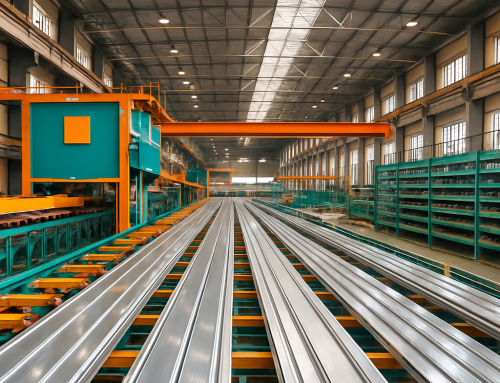

The Secrets of Metallurgy: How to Increase Aluminium Profile Hardness
The hardness of aluminium profiles is a critical parameter for mechanical strength and service life. Through proper techniques and control mechanisms in the production process, hardness values can be optimized. Below are the key methods and their details:
1️⃣ Aluminium Alloy Selection
High-Strength Alloys : 6000 and 7000 series alloys naturally offer higher hardness.
Microalloy Additives : Balancing Mg, Si, and Cu ratios directly impacts hardness values.
2️⃣ Aluminium Extrusion Temperature and Speed
Optimal Temperature Range : Excessive heat reduces hardness, while insufficient heat causes brittleness.
Speed Control : High speeds compromise surface quality, while low speeds refine grain structure.
3️⃣ Heat Treatment
Artificial Aging : Performed at 160–200°C to enhance hardness.
- Ideal ramp time should not exceed 60 minutes.
- Custom thermal recipes should be applied based on material and profile cross-section.
Natural Aging : Achieved by room-temperature storage for gradual hardness improvement.
4️⃣ Cooling Method
Rapid Water Quenching : Critical post-extrusion for hardness.
Forced Air Cooling : Provides more controlled hardness enhancement.
5️⃣ Aluminium Stretching Process
Straightening : 1–3% stretching improves both hardness and flatness.
6️⃣ Grain Structure Control
Fine-Grained Structure : Delivers higher hardness and strength.
Preventing Grain Growth : Avoid excessive temperatures and durations.
7️⃣ Equipment Optimization
Thermal Furnace Uniformity : Air circulation affects hardness distribution.
Profile Basket Layout : Ensures even airflow across all profiles.
8️⃣ Die Design and Surface Friction
Solid vs. Bridge Dies : Select based on profile geometry.
Surface Finishing : Low friction preserves hardness.
9️⃣ Surface Quality Maintenance
Oxidation Prevention : Avoid oxide layer formation during cooling.
Contaminant Removal : Eliminate oil residues and surface defects affecting hardness.
Quality Control & Hardness Testing
Brinell, Webster, Vickers Tests : Regular hardness measurements.
Sampling Plan : Compare specimens from different production stages.
Hardness depends not just on heat treatment but on the synergy of alloy selection, extrusion parameters, cooling, and quality control.
For more information or to request a customized solution for your project, don’t hesitate to contact us.